Daily exercise
Aim for 60–90 minutes of activity a day, split into a couple of sessions: brisk walks, a game of tug, hill sprints or a long sniffari.
Short-muzzled dogs overheat easily — walk early or late in hot weather and always carry water.
Care & training
Pitbulls are wonderfully easy to live with when three needs are met: a tired body, a working brain and clear, kind rules. Here's how to do all three without it taking over your life.
The essentials
Aim for 60–90 minutes of activity a day, split into a couple of sessions: brisk walks, a game of tug, hill sprints or a long sniffari.
Short-muzzled dogs overheat easily — walk early or late in hot weather and always carry water.
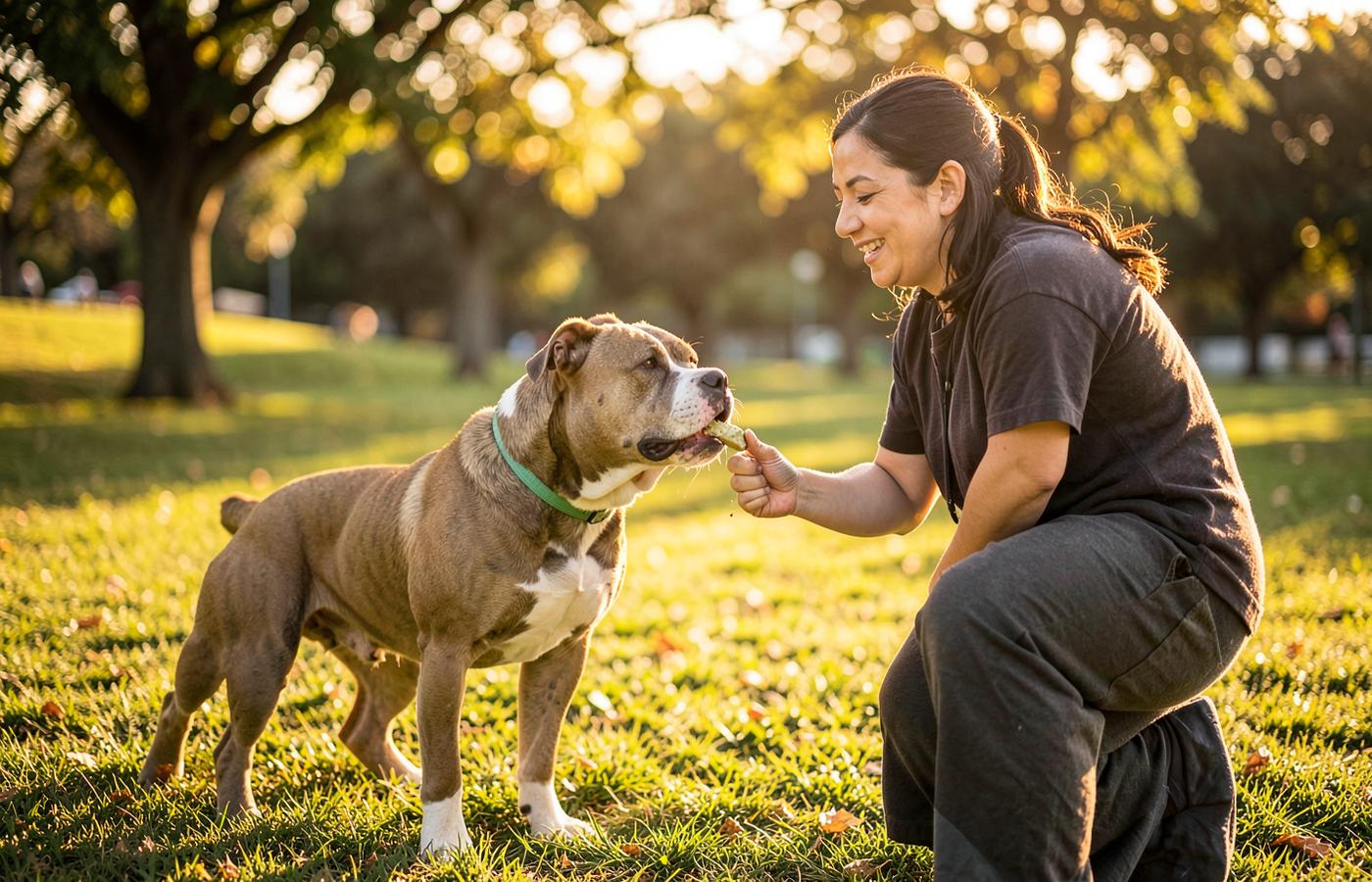
Positive reinforcement works beautifully with a breed this eager to please. Mark the moment your dog gets it right, pay generously, keep sessions to five minutes.
Skip harsh corrections and prong or shock tools — they suppress warning signals and damage trust.
Socialisation means good experiences, not crowded ones. Calm walks past distractions, treats near traffic, one relaxed dog friend at a time.
Let your dog choose whether to approach. Retreat is always an option.
Scatter feeding, snuffle mats, frozen stuffed toys and simple trick training tire a clever dog faster than another lap of the block.
Ten minutes of nose work is roughly worth a half-hour walk.
That short coat needs only a weekly rubber-curry brush and an occasional bath with gentle shampoo.
Check ears, trim nails every 3–4 weeks, and brush teeth a few times a week. Watch for itchy skin — pitbulls are prone to allergies.
Adult dogs need 14–16 hours of sleep. An over-tired pitbull looks "hyperactive" when it's really just wired.
Build a quiet den, use a settle routine, and protect nap time like you would a toddler's.
First 30 days
Whether your dog is eight weeks or eight years old, slow beginnings prevent months of trouble.
Keep the world small. One quiet room, predictable meals, short garden trips. Skip visitors and dog parks entirely.
Introduce a simple rhythm: walk, breakfast, nap, enrichment, walk, dinner, settle. Start name games and rewarding a loose lead.
Add one new low-key outing every few days. Sit on a bench and watch the world with treats. Calm observation beats busy greetings.
Book a reward-based class or trainer. Practise sit, recall, 'leave it' and a relaxed hand-off at the door.
Short, kind, doable — the kind of tip you can actually try on tonight's walk.