Deeply loyal
Pitbulls bond hard and fast. Expect a dog who follows you from room to room, sighs dramatically when you leave, and greets you like you've been gone for a decade.
Breed guide
Pitbull-type dogs are strong, sensitive and endlessly affectionate. Here's where they came from, what they're like to live with, and how to separate the stories from the science.
History & origins
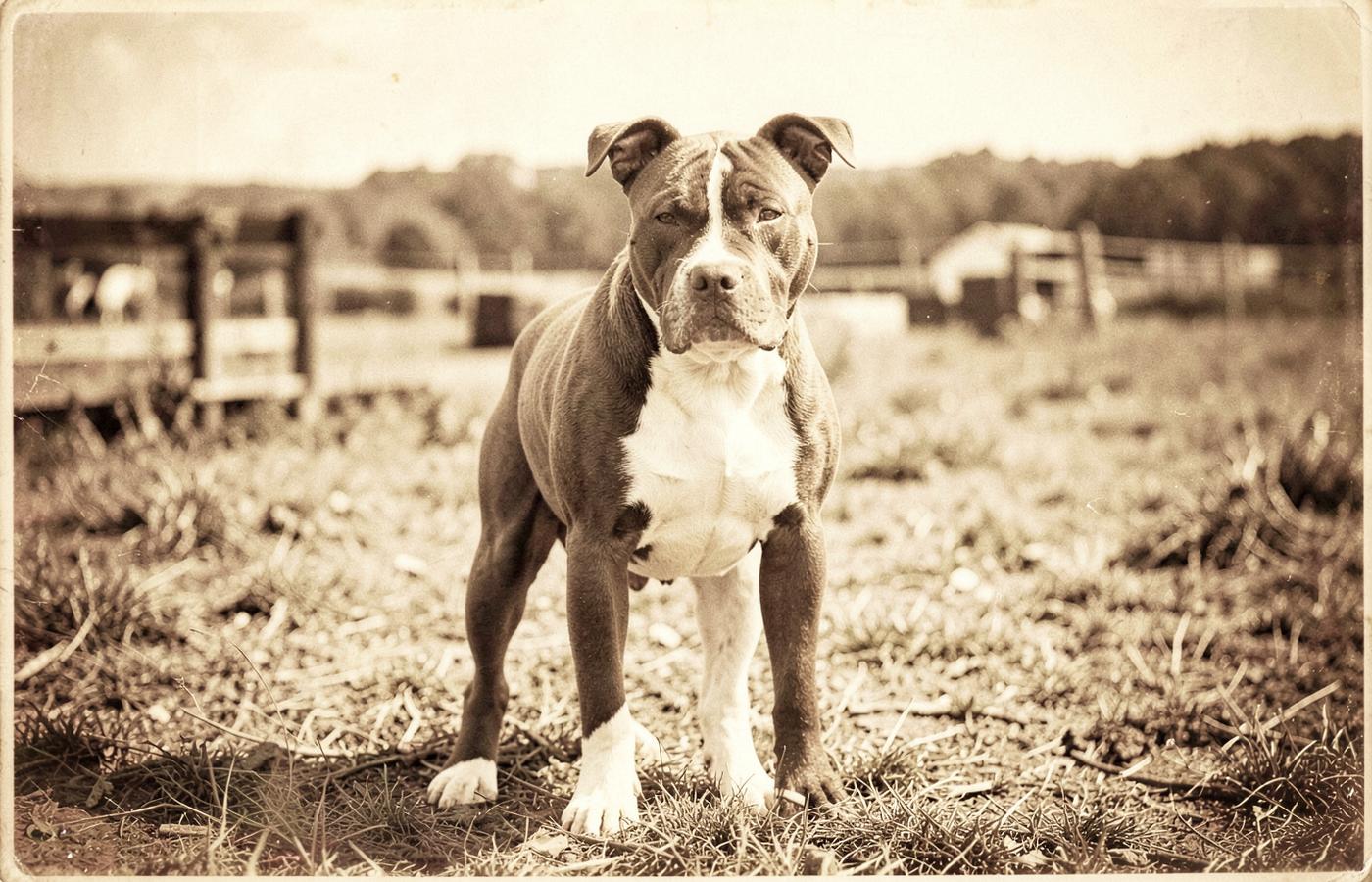
"Pitbull" describes a group of dogs rather than a single breed. It usually covers the American Pit Bull Terrier, American Staffordshire Terrier, Staffordshire Bull Terrier and a wide range of mixes that simply share a blocky head and a short coat.
Their ancestors were bulldog and terrier crosses in 19th-century Britain, bred for strength and grit. When those dogs travelled to North America with working families, they were put to gentler use: minding livestock, guarding homesteads and, above all, keeping children company. Their patience earned them the nickname "nanny dog" in early-1900s advertising, and they became one of the most recognisable dogs in American life.
The reputation shifted in the late 20th century, driven by sensational headlines and the cruelty of a small number of people — not by any change in the dogs themselves. Today, pitbull-type dogs are among the most common dogs in shelters, and among the most loyal companions once they get home.
Temperament & personality
Every dog is an individual, but people who live with pitbulls tend to describe the same handful of traits.
Pitbulls bond hard and fast. Expect a dog who follows you from room to room, sighs dramatically when you leave, and greets you like you've been gone for a decade.
Most are enthusiastic cuddlers who genuinely enjoy people. They do best inside family life rather than alone in a yard — and, like every breed, they need supervision and gentle rules around young children.
Zoomies, wiggle-butts, toy hoarding and a talent for looking ridiculous. Many stay puppyish well into their third or fourth year, so patience and humour go a long way.
They learn quickly and love having a job. That intelligence cuts both ways: a bored pitbull will invent its own entertainment, usually involving your furniture.
Myths vs facts
Read the left column, then the right. Six myths that follow pitbulls everywhere — and the honest answer to each one.
Myth
Pitbulls have locking jaws.
Fact
No dog has a locking jaw. Studies of skull structure show pitbull-type dogs share the same basic jaw mechanics as other medium breeds — there is no latch, hook or special muscle.
Myth
They're naturally aggressive toward people.
Fact
Temperament testing organisations consistently record pass rates for pitbull-type dogs in line with — and often above — the average across all breeds. Behaviour comes from genetics, upbringing, training and health, not a breed label.
Myth
A pitbull will suddenly snap for no reason.
Fact
Dogs almost always signal discomfort first: freezing, whale eye, yawning, moving away. 'Out of nowhere' usually means the earlier signals were missed. Learning body language protects dogs and people alike.
Myth
They're not safe around children.
Fact
Pitbulls are often affectionate, patient family dogs — but no dog of any breed should be left unsupervised with small children. Teach kids to respect a dog's space and give the dog a quiet retreat.
Myth
You can identify a pitbull on sight.
Fact
'Pitbull' isn't one breed — it's an umbrella term. Visual identification studies show even shelter professionals frequently disagree, and DNA tests often contradict the label on the kennel card.
Myth
They can never live with other pets.
Fact
Many pitbulls happily share a home with cats and other dogs. Like any strong, playful dog they benefit from careful introductions, good management and honest assessment of the individual dog.
Our monthly letter unpacks one common misconception, one care tip and one very good dog photo.